
Oct
Ordering the right amount of pumping grout can make a big difference to how smoothly a project runs. Order too little and work can come to a halt while you wait for additional material. Order far too much and you're left with unnecessary cost and waste.
So, how do you work out the quantity of pumping grout you need?
The basic principle is relatively straightforward: calculate the volume of the space that needs filling, then allow for the characteristics of your chosen grout and a sensible amount of wastage. Here's how to approach it.

1. Measure The Area You're Grouting
Start by taking accurate measurements of the void, cavity or area that will be filled.
For a simple rectangular space, you'll normally need three measurements: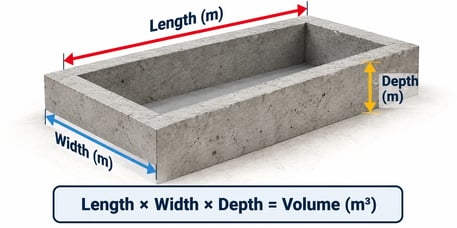
- Length
- Width
- Depth
Make sure all measurements are converted into the same unit before carrying out your calculation.
For example, if you're working in metres, the basic calculation is:
Length × Width × Depth = Volume in cubic metres (m³)
So, a void measuring 5m long, 0.5m wide and 0.1m deep would require:
5 × 0.5 × 0.1 = 0.25m³
This gives you your theoretical grout volume before allowing for other factors.

2. Convert The Volume Into The Quantity Of Grout Required
Once you know the volume, you need to convert this into the amount of your chosen pumping grout.
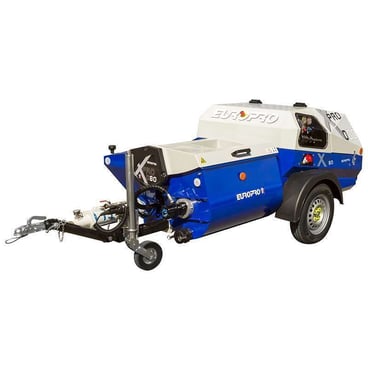
Different cementitious grouts and specialist materials have different yields, densities and mixing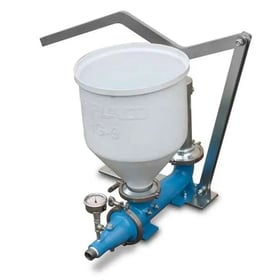 requirements. One bag of one product won't necessarily produce the same volume as a bag of another.
For this reason, always check the grout manufacturer's technical data sheet. It should provide information on yield or coverage, which you can use to calculate approximately how many bags will be required.
For example, if your chosen product produces 0.012m³ of mixed grout per bag and your calculated requirement is 0.25m³:
0.25 ÷ 0.012 = 20.83 bags
You would therefore need at least 21 bags before allowing for wastage.

3. Allow For Wastage And Site Conditions
A calculation on paper assumes that every bit of mixed material ends up exactly where you want it. On a construction site, that rarely happens.
You may lose some material through:
- Mixing and handling
- Material remaining inside the grout pump
- Delivery hoses
- Priming the pumping system
- Spillages
- Irregular or uneven voids
- Changes in the actual dimensions of the area
Adding a sensible contingency to your calculated quantity can help prevent you running short partway through the job.
The appropriate allowance will depend on the application and site conditions. Rather than applying the same percentage to every project, consider the complexity of the job and speak to your grout supplier where necessary.
4. Be Particularly Careful With Irregular Voids
Not every grouting project involves a neat rectangular space. When filling irregular voids, cracks, cavities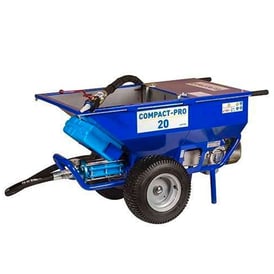 or spaces around existing structures, calculating the exact grout volume can become more difficult.
Where possible, break the area into smaller, simple shapes and calculate each volume separately. You can then add the figures together to estimate the total quantity.
For injection grouting or situations where the extent of a void isn't fully known, calculating material requirements may involve greater uncertainty. Having additional grout available can help prevent delays.
5. Consider Your Grout Pump And Hose Setup
Material quantity isn't the only thing to consider when planning a grout pumping project.
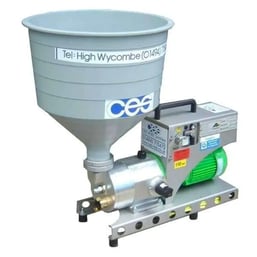
Your grout pump needs to be suitable for the material you're using, including its consistency and maximum aggregate or particle size. You should also consider pumping distance, delivery height, hose diameter and the required output.
Longer hose runs can also mean more material is held within the delivery line.
For example, a 25mm internal-diameter hose holds approximately 0.49 litres per metre. A 40m hose could therefore contain almost 20 litres of material when full.
Accounting for your pumping setup helps create a more realistic material estimate.

6. Check Your Figures Before You Start Pumping
Before ordering your grout, run through your calculation again:
- Have you measured the area accurately?
- Are all measurements using the same units?
- Have you calculated the total volume?
- Have you checked the manufacturer's stated yield?
- Have you allowed for pumping losses and wastage?
- Have you considered material within the hose and pump?
- Is your grout suitable for the pump you're planning to use?
Spending a few extra minutes checking these details can save considerable time once pumping begins.
Calculate First, Pump Second
Working out how much pumping grout you need starts with calculating the volume of the space you're filling. From there, use the manufacturer's stated yield to determine the quantity of material required and make an appropriate allowance for your pumping setup, site conditions and potential wastage.
Just as importantly, make sure your grout pump is suitable for the material and application.
At CES Hire, we've been supplying specialist construction equipment for over 40 years. Whether you're looking to hire or purchase a grout pump, our team can help you choose equipment suited to your project.
Browse Grout Pumps
Planning an upcoming grouting project? Explore our range of professional grout pumping equipment.
