
Nov
CES Hire | Rendering Advice & Guides
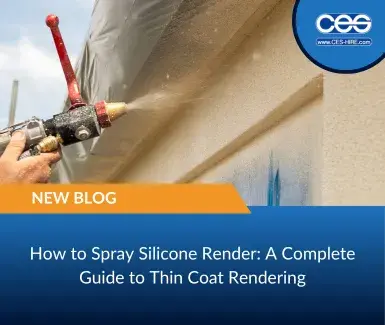
Silicone render has become an increasingly popular choice for both residential and commercial projects, thanks to its durability, weather resistance and attractive finish. But while traditional hand application remains common, more professional renderers are discovering the benefits of spraying silicone render to improve efficiency and productivity on site.
Whether you're an experienced renderer looking to make the switch from hand application or you're new to machine spraying, understanding the correct equipment, preparation and application techniques is essential to achieving a professional finish.
In this guide, we'll explore how to spray silicone render, the benefits of machine application, common mistakes to avoid and how a compact spray machine such as the Euromair DropPro 8P can make the job easier.

What Is Silicone Render?
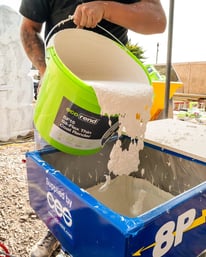
Silicone render is a ready-mixed, decorative thin coat render commonly used as the finishing layer on external wall insulation (EWI) systems and suitable prepared render substrates.
Unlike traditional sand and cement render, silicone render is typically supplied in tubs, ready for application following the manufacturer's preparation instructions.
Its popularity comes from several key benefits:
- Water repellency: Helps protect external walls against rain and moisture.
- Breathability: Allows water vapour to pass through the render system.
- Flexibility: Helps accommodate minor substrate movement, depending on the product and system.
- Colour options: Available in a wide variety of colours and textured finishes.
- Low maintenance: Many silicone render systems offer resistance to dirt and weathering.
Thin coat silicone render is commonly available in different grain sizes, including 1mm, 1.5mm and 2mm, depending on the manufacturer and finish required.
Although the terms thin coat render and silicone render are often used interchangeably, not all thin coat renders are silicone-based. Acrylic, silicate and other specialist formulations are also available.
Can You Spray Silicone Render?
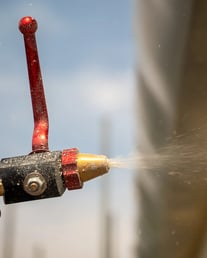
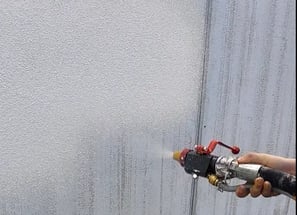
Yes! Many silicone renders can be applied using a suitable spray machine, offering a practical alternative to traditional hand application.
However, not all silicone render products are suitable for spraying. Always check the manufacturer's technical data sheet for approved application methods, equipment recommendations and material preparation requirements.
When using a compatible machine, spraying allows material to be delivered directly onto the wall through a hose and spray gun, reducing the need to repeatedly load material onto a hawk or trowel.
For renderers working on larger elevations, this can be particularly beneficial, helping maintain a consistent application process while reducing repetitive manual handling.
It's important to remember that spraying doesn't necessarily eliminate hand finishing. Many silicone render systems still require the material to be worked or textured using a suitable plastic float to achieve the specified finish. Check out our blog that gives you our top tips on achieving the very best finish when working with silicone render.
Spraying vs Hand Applying Silicone Render: Which Is Better?
Both application methods have their place, and the best option will depend on the size of the project, the material being used and the experience of the rendering team.
|
Hand application |
Machine spraying |
|---|---|
|
Minimal machinery required |
Requires suitable spray equipment |
|
Practical for small or awkward areas |
Efficient for larger wall areas |
|
Material applied using trowels |
Material delivered through a spray gun |
|
Greater repetitive manual application |
Can reduce repetitive loading and application |
|
Less equipment cleaning |
Requires hose, gun and pump cleaning |
For contractors regularly applying silicone render, investing in a spray machine can help improve workflow and reduce time spent on the physical application process.
However, machine setup, masking, cleaning and finishing time must also be considered when assessing the overall efficiency of a project.
What Equipment Do You Need to Spray Thin Coat Render?
Using the correct equipment is essential for reliable spraying and a consistent finish.
Depending on the material and application requirements, your equipment may include:
- Thin coat render spray machine: A machine capable of pumping and spraying the selected material.
- Material delivery hose: The correct diameter and length for the machine and material.
- Spray gun and nozzle: Selected to suit the render's grain size, consistency and desired spray pattern.
- Air compressor: Where required by the spray system to atomise the material.
- Water supply: For cleaning equipment and any preparation permitted by the render manufacturer.
- Masking and protection materials: To protect windows, doors, surrounding surfaces and areas vulnerable to overspray.
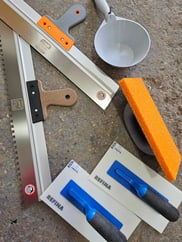
- Finishing tools: Including plastic floats and appropriate hand tools where the finish requires additional texturing.
Choosing the correct spray machine is particularly important. Machines designed for traditional basecoat or monocouche render may not be the most practical solution for ready-mixed thin coat finishes.
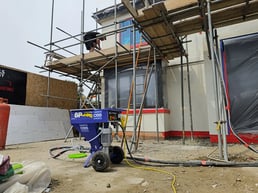
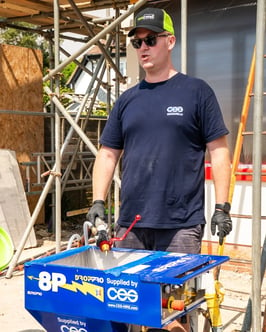
For this type of work, a compact and portable machine such as the Euromair DropPro 8P can be a useful option.
How to Spray Silicone Render: Step-by-Step
Although individual render systems have different requirements, the following provides a general overview of the spraying process.
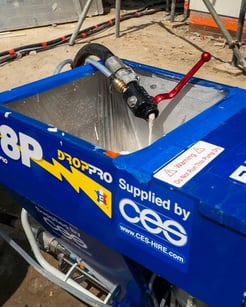
Step 1: Prepare the substrate
Good preparation is essential to achieving a quality finish.
Ensure the substrate is clean, sound, dry as required and suitably prepared according to the render manufacturer's instructions.
Where required, apply the specified primer and allow it to dry fully before beginning the finishing coat.
Any underlying basecoat, reinforcement mesh and other system components should already be installed and cured in accordance with the approved render system.
Step 2: Protect surrounding areas

Before spraying, mask windows, doors, frames, paving and any other surfaces that could be affected by overspray.
Using pre-taped masking film and suitable protective sheeting can make this process quicker and help minimise cleaning afterwards.
Don't forget to consider wind conditions, particularly when working outdoors.
Step 3: Prepare your silicone render
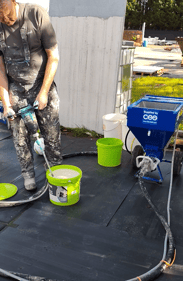
Check the manufacturer's instructions before preparing the material.
Ready-mixed silicone render may require stirring to achieve a uniform consistency. Only add water if specifically permitted by the manufacturer, and never exceed the recommended amount.
Incorrect material consistency can affect spray performance, adhesion, texture and the final appearance.
Step 4: Set up your spray machine
Position your machine on stable ground, connect the appropriate material hose and spray gun, and prepare the compressor or air supply where required.
Check that all connections are secure and that the equipment is correctly assembled.
Follow the machine manufacturer's priming and startup instructions before introducing the render.
Step 5: Test your spray pattern
Before spraying the main elevation, carry out a test using the selected material.
Check the spray pattern, material flow and coverage.
Adjust the machine settings, air supply or spraying technique as appropriate, following the equipment and material manufacturers' guidance.
This is particularly important when working with different render grain sizes or switching between products.
Step 6: Apply the silicone render
Once you're happy with the test application, begin spraying the prepared surface.
Maintain a consistent distance from the wall and use controlled, overlapping passes to achieve even coverage.
Work systematically across the elevation, avoiding unnecessary stops and maintaining a wet edge where required by the render system.
Pay attention to the manufacturer's recommended application thickness, which is often related to the grain size of the material.
Step 7: Finish the surface
Depending on the silicone render being applied, additional finishing may be required.
Many textured thin coat renders are floated using a plastic float to create a uniform appearance.
Follow the manufacturer's recommendations regarding finishing technique and timing, and avoid overworking the material.
Step 8: Wash out your machine
Once spraying is complete, it's essential to clean your equipment thoroughly before the material begins to cure.
Follow the machine manufacturer's wash out procedure, paying particular attention to the pump, delivery hose, spray gun and nozzle.
Always isolate equipment and safely release pressure before disconnecting pressurised components.
A thorough wash out helps prevent blockages, protects machine components and keeps your equipment ready for its next job.
Common Mistakes When Spraying Silicone Render
Even experienced renderers can encounter problems when changing materials or equipment.
Here are some common issues to watch out for:
1. Incorrect material consistency
Adding too much water or failing to prepare the material correctly can affect application and finish quality.
2. Using the wrong nozzle
An unsuitable nozzle can cause an uneven spray pattern, poor coverage or blockages.
3. Inconsistent spraying technique
Changing spray distance, movement speed or overlap can lead to variations in application thickness.
4. Ignoring weather conditions
High temperatures, direct sunlight, strong winds and cold or wet weather can all affect render application and curing.
Always follow the manufacturer's specified application temperature and weather limits.
5. Poor substrate preparation
Applying silicone render to an unsuitable or inadequately prepared surface can compromise adhesion and the finished appearance.
6. Leaving material inside the machine
Allowing render to dry inside hoses, pumps or spray guns can result in blockages and unnecessary maintenance.
Taking time to prepare correctly, test your setup and clean your equipment can make a significant difference to the overall spraying experience.
Introducing the Euromair DropPro 8P: A Compact Solution for Thin Coat Rendering
For professional renderers looking to move into machine spraying, or those wanting a compact alternative to larger rendering machines, the Euromair DropPro 8P is well worth considering.
Designed for spraying compatible thin coat renders and grouts, the DropPro 8P combines portability with a practical setup for professional applications.
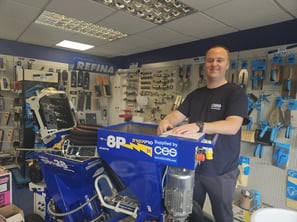
Why choose the DropPro 8P?
- Compact and lightweight: Easy to transport between jobs and practical for sites where space is limited.
- Designed for specialist applications: Suitable for compatible thin coat renders, top coats and grouting materials.
- Straightforward operation: A practical option for contractors looking to introduce machine spraying into their workflow.
- Efficient application: Helps deliver material consistently when correctly set up and operated.
- Easy to clean: Designed with routine cleaning and wash out in mind.
Whether you're working on residential properties, external wall insulation projects or larger commercial elevations, the DropPro 8P can be a useful addition to your equipment range.
Always confirm compatibility with your chosen render before spraying.
Watch the Euromair DropPro 8P in action
Want to see how the machine works before making the switch?
We've created a complete step-by-step video guide demonstrating the Euromair DropPro 8P, taking you through the full setup, spraying and wash out process.
It's ideal for anyone considering purchasing a DropPro 8P, as well as existing owners looking for a useful refresher.
Watch our full DropPro 8P tutorial
Machine Training and Support from CES Hire
At CES Hire, we understand that purchasing a rendering machine is an investment in your business.
That's why, when you purchase a Euromair DropPro 8P or any machine from CES Hire, you'll receive full hands-on training at CES HQ.
Our experienced team will guide you through setting up, operating, maintaining and cleaning your machine, helping you feel confident before heading out onto site.
Alongside machine sales, we also offer equipment hire, servicing, spare parts and expert technical advice to help keep your projects running smoothly.
Frequently Asked Questions About Spraying Silicone Render
Can all silicone renders be sprayed?
No. Although many silicone renders are suitable for machine application, some are intended for hand application only. Always check the product's technical data sheet and confirm compatibility with your spraying equipment.
Do you need a compressor to spray silicone render?
Many spray systems use compressed air to create the required spray pattern. Whether a separate compressor is needed depends on the machine's design and configuration.
Can you spray silicone render directly onto blockwork?
Silicone thin coat render is generally applied as part of a suitable render system over a prepared substrate or reinforced basecoat. It should not be applied directly onto blockwork unless the manufacturer specifically approves that application.
Is spraying silicone render quicker than applying it by hand?
Machine spraying can reduce application time, particularly on larger elevations. However, overall productivity depends on site conditions, masking, setup, finishing and cleaning requirements.
What is the best machine for spraying thin coat render?
The best machine depends on the material, grain size, project requirements and available power supply. Compact machines such as the Euromair DropPro 8P are designed for specialist applications, including compatible thin coat renders.
Can I hire a silicone render spray machine before buying one?
CES Hire offers specialist rendering equipment for hire, including the Euromair DropPro 8P. Hiring can be a practical way to experience machine spraying before committing to a purchase, subject to availability and material compatibility.
Ready to Make the Switch to Spraying Silicone Render?
Spraying silicone render can offer significant advantages for professional renderers, particularly when working on larger areas or regularly applying thin coat finishes.
With the right preparation, suitable materials and correct equipment, machine spraying can help improve application efficiency while maintaining a high-quality finish.
If you're considering adding a thin coat render spray machine to your setup, the Euromair DropPro 8P is a great place to start.
At CES Hire, we're here to help you choose the right machine, understand how to use it and keep it performing at its best.
Explore our range of rendering machines at CES Hire, or get in touch with our team for expert advice on machine sales, hire and training.
